^ Vissza Fel

Europe for the citizens

Europe for the citizens: common values, common challenges and common European future

The twin towns have gathered for the event called Common values, common challenges and common European future organized by the European Union in the period of 14-16 June in Székelyhíd Romania. This event was held in parallel with the City Days, the opening was held on Friday together with the towns of Edelény HU, Gersekarát HU, Nyiradony HU, Kishegyes HU, Kamocsa SK and Pacser SB, and of course the city of Székelyhíd RO was represented as the host.

The presentations, which were held in the Saint László hall of the City Museum, praised the importance of community, active citizenship, responsible actions of the NGOs, the planning, the achievement and the active participation. Due to these topics, we have listened various presentations about the fact where we have started and where we would arrive if we lived according to the community’s belief, if we planned and became active in Europe.

Old trends in an innovative world

Earlier last year, Ér Hangja Médiacsoport managed to win its first ESC project titled Volunteers for supporting European Cultural Diversity. This amateur hosting organization has been for nearly 10 years the eyes, ears and mouth of Săcueni, which is a small town located in Romania and close to the Hungarian border. Thus, making use of their powerful media influence their aim with this ESC project is to focus on preserving and promoting the cultural heritage of the region as well as incorporating European values.

A flick through time with Nagy Mária

 1940s to 2000s 

“I prayed to God every night so that he allowed my family and I to come back to Săcueni” said Marika Néni as she recounted how her life unfolded under the Socialist Republic of Romania. It was 1964 when this family of four decided to move out of Săcueni and into a coal mining territory, in an attempt to alleviate the precarious living conditions which most people around the country were experiencing. Having returned to their place of origin after a decade, our protagonist noticed that the deterioration of Romania’s political and socio-economic landscape had escalated. 

Where the past meets the future

How much do you really know about your culture, its values and traditions? And, what about the history of the place where you were raised? It is astonishing to note how an increasing percentage of young and middle age people tend to disregard the answers to these seemingly uncomplicated questions. This occurs as a result of cultural heritage preservation being overlooked and neglected by most communities around the world, despite the enormous advantages it can offer both at a socio-cultural and economic level. In an attempt to overcome this issue and encourage more people to become involved in the matter, the EU declared 2018 as the European Year of Cultural Heritage. Given the timelessness and relevance of the topic, it would be stimulating to bring Săcueni locals closer to this initiative while assessing the importance of their participation, and revealing in what ways could the locality obtain benefits from it.

Common values, common challenges, common EUropean future

The town twinning event will be held in Săcueni, Romania, between 14-16 June 2019. It aims to bring together communities from Romania, Hungary, Slovakia and Serbia in order to get familiarized with the history of the European Union, its operation and other aspects. The participants will debate during the program the actual issues which affect the EU, like refugee crisis, Brexit, Euroskepticism and Europhobia, they will commonly try to find solutions for these.

An English brochure about old crafts

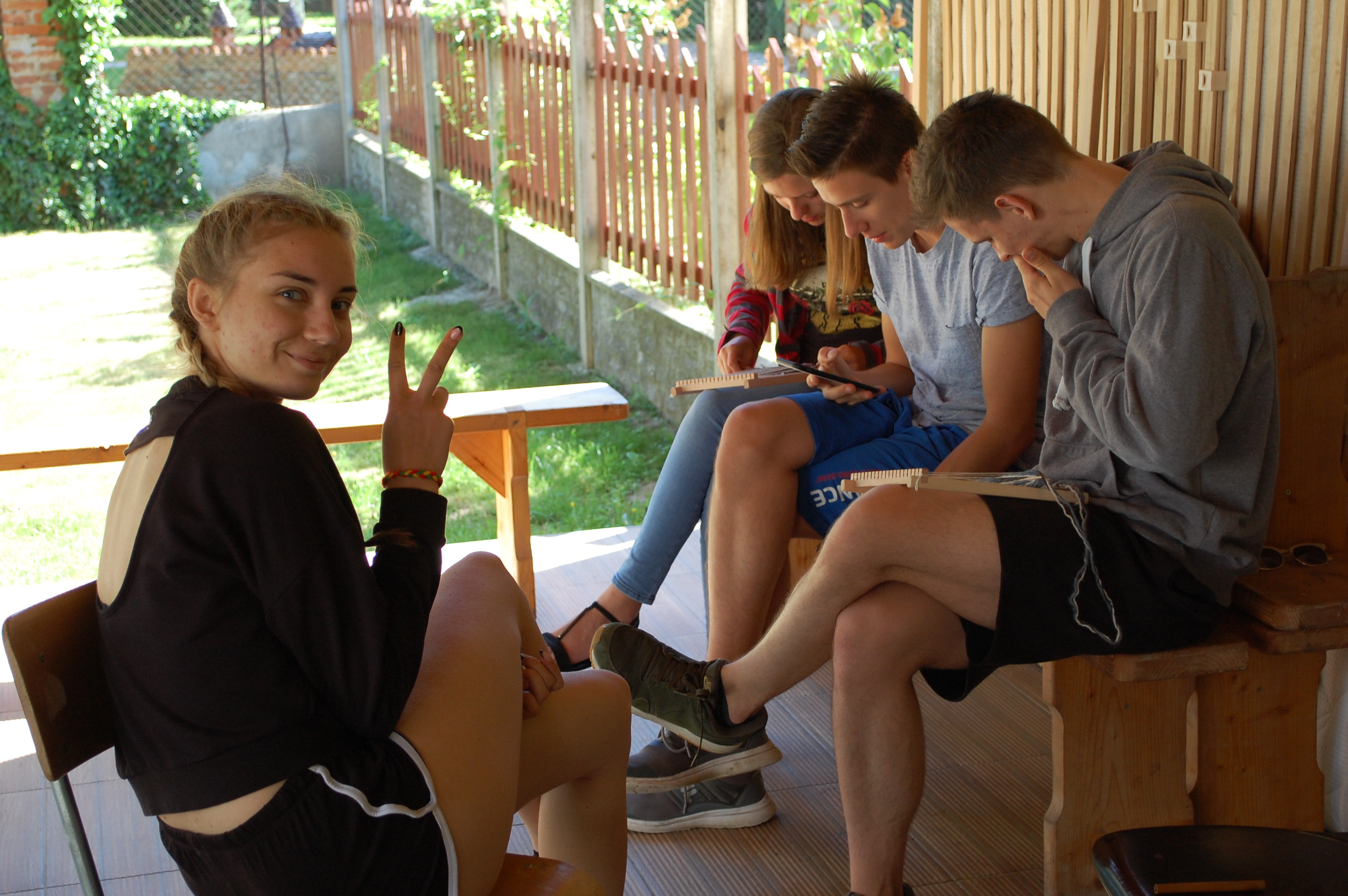
The young participants of the program presented the small extension booklet they prepared together about the old crafts of the micro-region in Săcueni, during the Erasmus + youth exchange organized by the Erhangja Association.

The topic of the program of the week was the revival of the old crafts and their transformation into a possible source of income. Thus, in addition to the activities related to the old trades, the potential entrepreneurs of the future have also taken a look at the marketing world in practical form, through a game.

Weaving

Weaving is a traditional craft which originally was manual but modernized during the Industrial Revolution when the weaving machine was invented. The first thing that comes into most people’s mind when speaking about weaving is the production of carpets but actually many sorts of things can be created with this technique such as clothes or bags. Weaving requires great amount of concentration and patience, of course but preparation takes more time than the weaving itself. Furthermore, when you would like to make any sample into your production you have to be more precise to count on which strings you would like to weave it. Keep it in mind that weaving is also a craft which you should try once in your lifetime since it can be a real fun if you have already learnt the technique.

Chair Weaving

Chair weaving has a long history as people in the past used this technique to make furniture for themselves. However, not only chairs were made with weaving but other sorts of furniture, as well. A reason for that might be the fact that this kind of furniture is long-lasting and can be used even for a hundred year. It is important to know that people work with sedge when it comes to weaving but you have to be really careful with it as it can cut your fingers easily if you pull it in the wrong way. First, you have to make the sedge leaves wet, secondly twist them, and if you already have the ready-made chair frame you can start the weaving itself.

Felting

Felting also belongs to those crafts which has been practiced for a very long time. The wool used for felting played an important role in our ancestors’ lives as it was one of the components of their “houses”, the so called yurts. One reason for that is that wool is waterproof and resistant to the challenges of the weather so it could save people perfectly. Besides this, the same material was used for shepherds’ clothes. These ways of use of wool indicates the importance of felting as this is the technique nowadays which is mainly practiced only as a hobby. Since some felting techniques are extremely time-consuming, you will need a huge amount of patience if you would like to try them. On the other hand, if you like to create nice things rapidly, look for a felting needle and let the magic begin. However, if you have enough patience, felting can become your real passion easily as it is amazing how the wool changes during the stages of it.

Crafts of the Past, Crafts of the Future

In May the 7th Erasmus Plus international youth exchange takes place in Sacueni, organized by the Erhangja Association. And they are looking forward to have you as a participant!

The project that takes place between 7-13 May, 2018 offer opportunity to 6 participants (aged between 17-30) and a leader (18+) from each participant country, namely: Greece, Hungary, Lithuania and Romania. The work language of the one week program is English. The title of the project is: Crafts of the Past, Crafts of the Future!